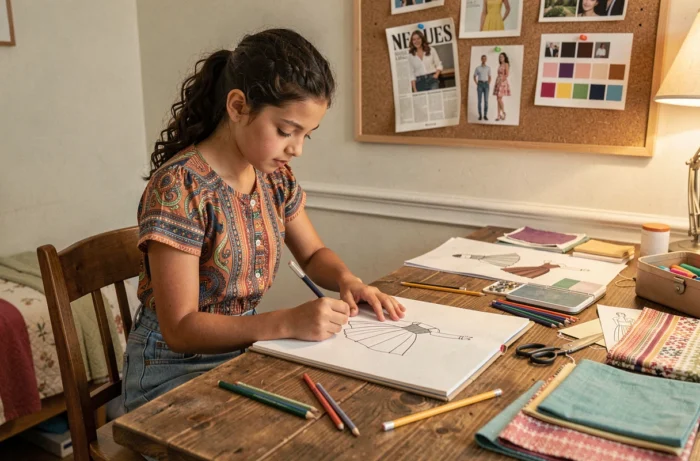
At 12 years old, the passion for fashion can already be intense, but the legal framework and the realities of the stylist profession impose concrete limits that young creators and their parents must be aware of. In France, becoming a stylist involves much more than just drawing sketches: one must understand textiles, master technical tools, and, above all, navigate a legal environment that strictly regulates the economic activities of minors.
Selling creations at 12 years old: what French law prohibits
The first instinct of a motivated young stylist is often to want to sell their creations. French law sets a clear barrier on this point.
A minor under 16 cannot create a business in their name, even with parental consent. Neither a micro-enterprise nor a sole proprietorship: the legal threshold remains set at 16 years old.
Before this age, any economic activity (selling clothes, styling services) must be carried out by a parent or an association. In practical terms, a 12-year-old who sews accessories and wants to offer them at a market or online needs an adult to take on the legal and tax responsibilities of this activity.
Even from the age of 16, restrictions persist. A minor can then create a micro-enterprise for artisanal, liberal, or service activities, but the buying and reselling of clothes remains prohibited until they are legally emancipated as a merchant. This distinction often surprises, as it means that a teenager can offer a custom creation service but cannot buy fabrics to resell finished pieces under a standard commercial status.
Knowing these steps for young stylists allows one to anticipate legal constraints before diving headfirst into a sales project.
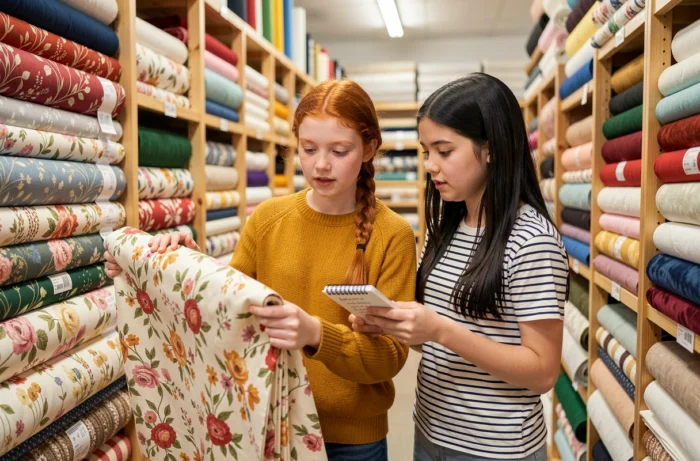
Learning textile design without a fashion school: resources accessible from 12 years old
French fashion schools like MODART International organize competitions open to high school students, but not to middle school students. The Young Stylist competition, for example, targets final year students. At 12 years old, the doors to diploma-granting programs are closed.
This does not mean that learning is impossible. Several concrete avenues exist to develop real technical skills:
- Municipal or associative sewing classes often accept children from 10-11 years old and teach the basics of pattern making, cutting, and machine assembly.
- Video tutorials on pattern construction, fabric selection, and prototype creation offer free access to skills that professional training covers in the first year.
- Fashion drawing (sketching silhouettes, researching patterns, creating a collection board) can be practiced with just a notebook and markers, studying body proportions and fabric draping.
The goal at this age is not to accumulate diplomas, but to build a personal portfolio that shows progression. Photographing each creation, documenting the manufacturing process, annotating material choices: these habits, adopted early, provide a real advantage for a future application to a fashion school.
The trap of all-digital
Many young enthusiasts focus exclusively on digital drawing or design software. Physical contact with textiles, understanding how a fabric falls, managing seams and finishes cannot be learned on a screen. Handling real materials remains the foundation of the modeling stylist profession, even in the age of computer-aided design.
Online presence and the image of minors: a legal framework to respect
Publishing creations on social media seems natural for a young creator who wants to be noticed. In France, the law strictly regulates the exposure of minors online.
Legislation on child influencers imposes rules as soon as a minor earns income (even indirectly) from their presence on platforms. Income generated by a child under 16 must be deposited with the Caisse des dépôts until they reach adulthood, following the model of child performers.
For a 12-year-old young stylist, this means that monetizing an Instagram account or a YouTube channel showcasing their creations is not just a personal project: it is a regulated activity that requires parental involvement and, in some cases, prior declaration.
On the other hand, keeping an online journal without commercial intent, sharing sketches, or documenting one’s learning without direct monetization remains possible and constitutes a good communication exercise, a skill that fashion schools value in their selection processes.
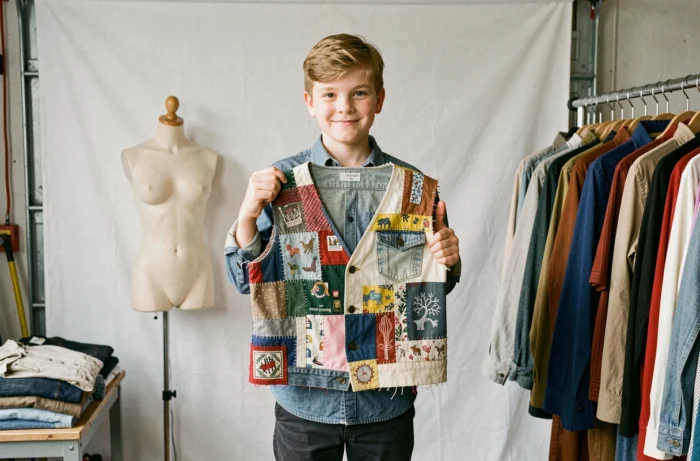
Building a collection project: a method suitable for young creators
The word “collection” is impressive, but the principle is accessible. A collection, even a modest one, relies on a coherence of theme, color palette, and material choices.
At 12 years old, working on a mini-collection of three to five pieces allows one to learn how to:
- Define a theme and develop it into varied silhouettes (top, bottom, accessory) without losing the main thread.
- Select textiles that are compatible with each other in terms of weight, texture, and care.
- Create a physical mood board (collage of fabrics, images, sketches) that serves as a reference throughout the project.
- Present the final result in the form of a portfolio or mini-fashion show in front of a small audience (family, sewing workshop, class).
The transition from sketch to real garment distinguishes a hobby from a true stylist approach. Many young people remain at the drawing stage due to lack of access to a sewing machine or fabrics. Resource centers and end-of-rolls in haberdasheries offer materials at reduced prices, sufficient for prototypes.
External feedback as a tool for progress
Showing creations to people outside the family circle provides more objective feedback. Some associative workshops organize collective presentations where young creators receive constructive opinions on their pieces. This type of supportive confrontation prepares them for the demands of juries in fashion schools.
A path towards styling that begins at 12 years old does not lead to an immediate career, and the French legal framework makes this clear. The years of middle and high school serve to accumulate technical skills, build a solid portfolio, and identify suitable post-baccalaureate training. Patience and regular practice matter more than media precocity.