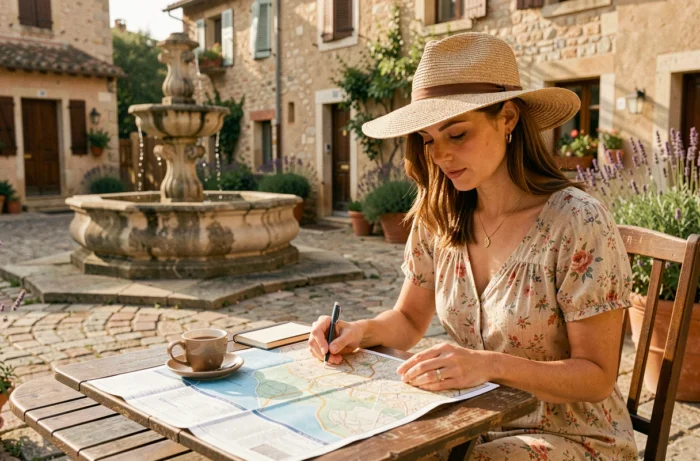
France remains the world’s top tourist destination in terms of visitor volume. Organizing a stay in the country is not just about choosing a region on a map: accommodation rules are evolving, the supply of seasonal rentals is contracting in certain areas, and booking habits must adapt. Here’s what to truly anticipate for a holiday in France that lives up to its promises.
Le Meur Law and Seasonal Rentals: What Changes for Travelers
Since the enactment of the Le Meur law on November 19, 2024 (law n°2024-1039), the framework for tourist accommodations has been significantly overhauled. The consequences for vacationers are direct, even if they are not widely covered in traditional travel guides.
Municipalities can now lower the rental ceiling for primary residences from 120 to 90 nights per year. In highly touristic cities, this mechanically reduces the number of available accommodations during peak season. Quotas for tourist accommodations by area are also possible, which limits the supply in certain sought-after neighborhoods.
For property owners, the tax regime has changed: the micro-BIC allowance is now 30% up to €15,000 in revenue for unclassified rentals, compared to 50% and a much higher ceiling previously. Some owners are withdrawing their properties from the seasonal rental market, which exacerbates the scarcity.
The practical consequence: booking early becomes a necessity, especially in destinations like the Atlantic coast, Provence, or the Alps. Comparing platforms with offers from direct hosts (campgrounds, guesthouses, labeled lodges) allows for broader options. A tool like the Guide des Vacances centralizes useful tips for finding stays outside of saturated circuits.

Destinations in France: Favor Depth Over List
Tourist destination rankings all look similar: Mont-Saint-Michel, Verdon Gorge, Calanques of Marseille. These sites deserve their reputation, but the saturation during peak season degrades the experience. The real trick is to target less publicized areas, just a few dozen kilometers from iconic spots.
Geographically Shift for Quality
Instead of the Var coast in August, the landscapes of inland Luberon or the Valensole plateau offer radically different stay conditions: fewer crowds, more accessible accommodations, preserved nature. The same reasoning applies to the Alps: the secondary valleys of Savoie or Beaufortain offer activities comparable to those of major resorts, without the crowd.
In Brittany, the northern coast (Saint-Brieuc Bay, Crozon Peninsula) remains less frequented than the Gulf of Morbihan. History and heritage enthusiasts will find megalithic sites, marked coastal paths, and local cuisine at reasonable prices.
Bet on the Off-Season
The months of September and October often offer the best quality-experience ratio in France. Temperatures remain pleasant in the south, accommodations offer off-season rates, and cultural sites regain a pace compatible with a serene visit. Central France (Auvergne, Dordogne, Lot) is particularly well-suited for these shifted periods.
Holiday Budget: Key Areas to Consider Before Booking
The accommodation category represents the most variable part of the budget. With the contraction of the supply of seasonal rentals in certain areas, prices are mechanically increasing on online platforms. A few concrete levers can help contain the bill:
- Always compare the platform price with the direct rate from the owner or manager. The commissions of intermediaries can represent a significant part of the displayed amount.
- Check quality labels (Gîtes de France, Clévacances, Tourism and Disability) that guarantee a level of service and facilitate recourse in case of disputes.
- Prefer full week stays rather than isolated nights: most hosts apply decreasing rates beyond five nights.
Transport is the other variable for adjustment. The rail network serves the majority of French tourist destinations, and tickets purchased several months in advance remain competitive compared to the actual cost of a car trip (tolls, fuel, parking). For nature or mountain stays, renting a vehicle on-site, limited to a few days, avoids incurring costs for the entire duration of the trip.
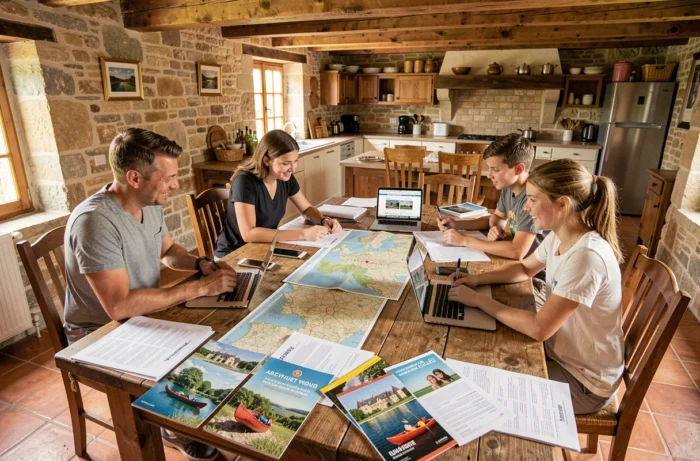
Activities and Stay On-Site: Prepare Without Overplanning
Overloading a holiday schedule produces the opposite effect of what is sought. Two or three standout activities per week are enough to anchor a stay in memory. The rest of the free time allows for spontaneous discoveries, local markets, and impromptu hikes.
For activities that require a reservation (via ferrata, sea outings, guided tours of heritage sites), anticipating two to three weeks in advance remains a good compromise. Local tourist offices publish their calendars online and often offer bundled rates or multi-activity passes.
- Regional natural parks offer guided discovery programs, often free or at a low cost, accessible to families.
- World Heritage sites (around forty in mainland France) have less crowded morning visit slots.
- Water activities on inland lakes (Annecy, Serre-Ponçon, lakes of Auvergne) provide a credible alternative to the crowded beaches of the coast.
Tourist attendance in France remains strong, but available data do not always allow for precise predictions of local peaks. Field feedback varies by region and year. Keeping a margin of flexibility in your dates, even by a few days, remains the most effective lever to transform an ordinary stay into truly memorable holidays.