
Between the rise in fuel prices, the growth of electric vehicles for long trips, and recent regulatory changes, the automotive landscape of 2026 is reshaping how the French prepare for their car journeys. What factors truly impact the budget, safety, and vehicle choice for traveling peacefully?
Fuel, electric, tolls: what a trip really costs in 2026
The expense that most influences travel decisions remains fuel. A Cofidis survey reported by La Dépêche in August 2026 shows that the rise in pump prices has led a significant portion of the French to travel shorter distances or for less time. Some have even given up traveling altogether.
The electric car is gradually changing the dynamics of this budget item. The cost per kilometer of a charge remains significantly lower than that of a full tank of fuel, but the differences vary depending on the charging network used.
| Expense Item | Thermal Vehicle | Electric Vehicle |
|---|---|---|
| Energy (fuel / charge) | High cost, continuously rising | Lower cost per km, variable depending on the charger |
| Toll fees | Identical regardless of the engine | Identical regardless of the engine |
| Travel time (including breaks) | Short breaks, quick refueling | Longer charging breaks on the highway |
| Pre-departure maintenance | Oil change, levels, tires, brakes | Tires, brakes, battery, software update |
The toll does not distinguish between types of engines. For vacationers who refuse this additional expense, national and departmental roads lengthen the journey but eliminate this cost. An article from Ouest-France in July 2026 cites motorists who never take the highway for this very reason.
Finding touring car information on Autour 2 Moi allows you to compare options before setting your route and budget.
Electric cars and long trips: French perceptions have shifted

Competing articles focus almost exclusively on preparing a trip in a thermal vehicle. The automotive news of 2026 tells a different story. According to L’Automobile Magazine (July 2026), a large majority of the French now believe it is possible to reach their vacation destination in an electric vehicle, with an increase of about fifteen points in one year compared to 2024-2025.
This shift in perception can be explained by several converging factors:
- The network of fast charging stations on highways has become denser, reducing anxiety related to range.
- Recent models of electric SUVs and sedans offer ranges that cover most home-vacation trips with one or two breaks.
- Public interest reports, such as the one aired by TF1 in the summer of 2026, have shown families attempting their first long trip in an electric vehicle, normalizing this practice.
However, queues at charging stations during peak departure times remain a major irritant. The Tecsol site has documented solutions tested on highways to streamline access to charging points during busy weekends. Charging time, not range, becomes the real point of friction for electric travelers.
Technical inspection and Ripost law: rules changing for motorists
Preparing for a car trip also involves ensuring the vehicle’s compliance. The year 2026 introduced two regulatory changes that traditional travel guides do not address.
Technical inspection blocked in case of serious manufacturer recall
Since 2026, a vehicle subject to a serious manufacturer recall can no longer obtain a favorable technical inspection. Specifically, if your car is subject to an unresolved safety recall (defective airbag, fire risk), the inspection center will block the validation. This measure, reported by the Dekra-Norisko blog, requires owners to check their vehicle’s recall status before making an appointment.
Ripost law and new traffic violations
The Ripost law, detailed notably by law firms specializing in road law, introduces new measures regarding road safety. Among the points that directly concern travelers: the strengthening of penalties related to phone use while driving and the expansion of radars installed in unmarked vehicles.
For a motorist preparing for a summer trip, these two developments impose additional checks:
- Consult the manufacturer’s website or the government portal to check if the vehicle is subject to a recall.
- Anticipate the technical inspection by factoring in a repair delay if a recall is in progress.
- Adapt driving to the new automated control zones, especially on secondary roads popular during the holidays.
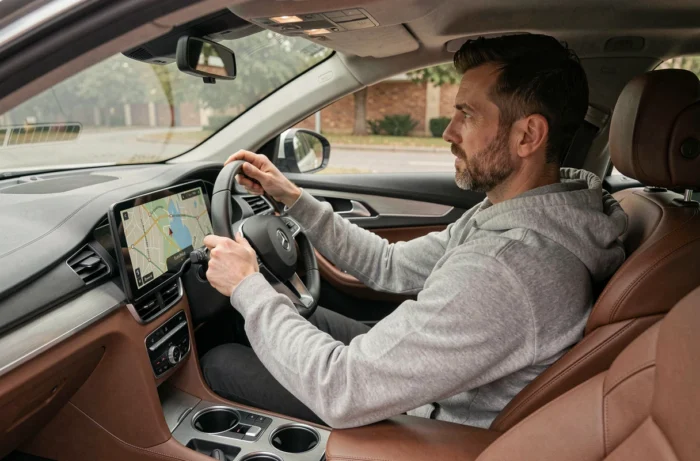
French vehicle fleet in summer 2026: SUVs, station wagons, and vans lead
An analysis published by Leboncoin Solutions Pro in the summer of 2026 paints a picture of the vehicle fleet on the roads during the holidays. SUVs overwhelmingly dominate summer roads, confirming a trend established for several years. Station wagons maintain a stable position, supported by their loading capacity for families.
Light commercial vehicles, often associated with micro-adventures and van life, also represent a growing share of vacation traffic. This diversification of the range of vehicles used for travel reflects a change in expectations: trunk volume and versatility take precedence over power or prestige.
On the manufacturers’ side, the upgrade of electric models in the SUV segment partly explains the shift in perception mentioned earlier. New electric SUVs combine sufficient range and loading space that families seek for long trips.
The choice of vehicle, the mode of propulsion, and knowledge of the new rules form a triangle that determines the quality of a car trip in 2026. Data shows that fuel prices remain the decisive factor for the majority of the French, while electric vehicles gain ground not through activism, but through economic calculation and tangible improvements in infrastructure.