The castor cake has quietly remained a staple in the “organic fertilizers” sections of garden centers for years. Belgium banned it in 2010 due to its toxicity, and regulatory pressure is mounting in several countries within the European Union. In France, the debate is intensifying around this product, the main danger of which, ricin, has no specific antidote.
For gardeners looking to do without it right now, the question is not just about finding a nitrogen substitute, but about rethinking fertilization based on the crops.
Ricin and the absence of an antidote: what really motivates the withdrawal
The toxicity of castor cake is not limited to a theoretical risk. Recent veterinary literature emphasizes that the management of ricin poisoning remains purely symptomatic, with no curative treatment available. Veterinarians now recommend the systematic removal of castor plants from gardens where pets live.
This observation goes beyond just the issue of animals. Young children, seed-eating birds, hedgehogs digging in the soil: castor cake, even buried, poses a risk of accidental ingestion that is hard to control. Belgium did not wait for a European consensus to act, and this regulatory asymmetry within the EU fuels anticipation in the French gardening press of a forthcoming ban for individuals.
Searching for organic alternatives to castor cake is therefore not an excessive precaution; it is a logical adaptation to a toxicological context that leaves no margin for safety.
Organic nitrogen fertilizers: adapting the choice to the type of crop
Castor cake was appealing due to its organic nitrogen content and its dual function as a fertilizer and repellent. Replacing it with a single universal product is illusory. The most reliable strategy is to target the input according to the needs of each family of vegetables.
Leafy vegetables: quick nitrogen in spring
Lettuce, spinach, and cabbage need quickly assimilable nitrogen during their growth phase. Two options stand out:
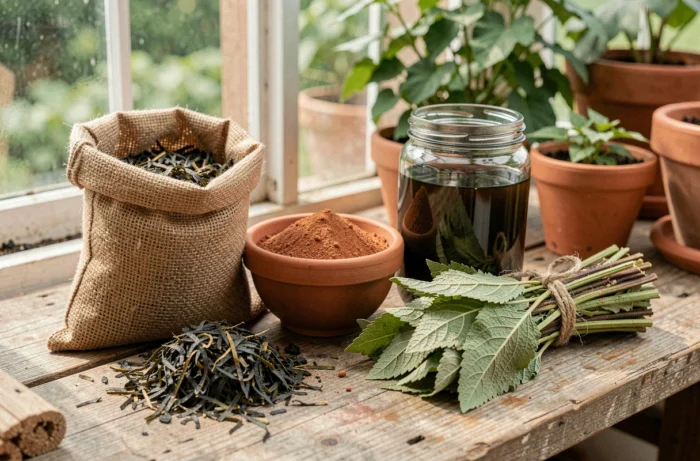
- Nettle manure, applied as diluted watering, provides a rapid nitrogen supply and stimulates microbial activity in the soil. Its cost is almost zero for those with a patch of nettles.
- Dried blood also acts quickly, releasing nitrogen within a few days. It comes in powder or granule form, easy to dose at the base of the plants.
- Mature compost, as a supplement, provides a slower nitrogen base and improves soil structure, but is not sufficient alone for nitrogen-hungry crops.
A common mistake is to overdose dried blood on already rich soils. An excess of nitrogen on leafy vegetables causes waterlogged tissues, making them more susceptible to fungal diseases.
Fruit vegetables: phosphorus and potassium as supplements
Tomatoes, zucchinis, and peppers have different needs. Nitrogen remains useful at the beginning of the cycle, but it is phosphorus (flowering, fruiting) and potassium (fruit quality) that make the difference at harvest time.
Crushed horn releases its nitrogen very slowly, over several months, which corresponds well to the long cycle of nightshades. Combined with bone meal (a source of phosphorus) and wood ash (rich in potassium), it creates a complete fertilization without resorting to a single industrial product.
Field reports vary on this point: some gardeners find crushed horn too slow for potted tomatoes, where the volume of substrate limits the nutrient reserve. In this case, adding beet vinasse, rich in potassium, can effectively complement the system.
Pest repellent: the forgotten function of castor cake
Part of the popularity of castor cake was due to its supposed repellent effect against rodents, moles, and soil larvae. This property is directly linked to ricin, thus inseparable from its toxicity. Finding a fertilizer that both nourishes and repels pests at the same time is more a matter of marketing than agronomy.
No approved organic fertilizer combines fertilization and proven repellent effect. The two functions must be treated separately. For voles or moles, mechanical methods (traps, buried mesh) remain the only ones with documented effectiveness.
Neem cakes, sometimes presented as a repellent alternative, themselves face increasing restrictions in several European countries due to their impact on pollinating insects. Replacing one problematic product with another whose regulatory framework is evolving unfavorably is not a sustainable strategy.
Organic fertilization without castor cake: building a foundational plan
Rather than seeking a single substitute, the transition requires thinking in systems. A living soil, regularly amended with organic matter, reduces dependence on any input, whether organic or not.
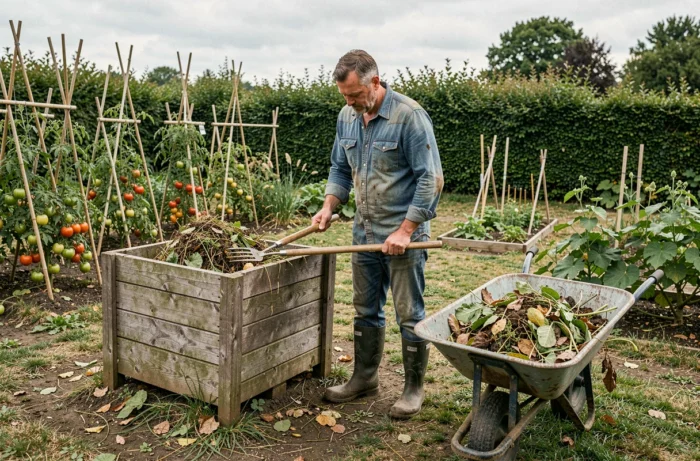
- Homemade compost, made from kitchen and garden waste, covers a significant portion of the nitrogen, phosphorus, and trace element needs for a family vegetable garden.
- Green manures (clover, mustard, vetch) sown between two crops fix atmospheric nitrogen in the soil and limit winter leaching.
- Mycorrhizae, symbiotic fungi added at planting time, improve phosphorus absorption by roots and reduce the need for external fertilization.
- Organic mulching (wood chips, straw, dead leaves) nourishes the soil fauna, which in turn mineralizes nutrients at the pace of plant needs.
This type of approach requires more planning than spreading a bag of castor cake in spring. The available data does not allow for concluding that a garden managed this way achieves exactly the same yields in the first year. However, soil fertility improves season after season, where a single fertilizer input only corrects a punctual deficit.
The withdrawal of castor cake, whether voluntary or regulatory, forces a question that many gardeners have avoided: does a well-maintained soil really need a miracle fertilizer? Alternatives exist, but they work better together than alone, and their effectiveness depends as much on the soil as on the action taken.