Breton culture is not limited to a fixed heritage. It reconfigures each year under the influence of language policies, digital transformations, and new artistic forms that redefine what it means to “be Breton” in 2026.
Digital Corpora and the Breton Language in the Face of Artificial Intelligence
Breton faces a problem that most mainstream articles do not address: a language can remain alive in society while disappearing from machines. Without sufficient digital corpora, generative AI models completely ignore Breton, which reduces its visibility in automatic translation tools, voice assistants, and search engines.
Since 2023, Breton researchers and language activists have been working to create datasets usable by algorithms. The parallel with Irish Gaelic, facing the same gaps, shows that the problem extends beyond Brittany. We observe that the digital survival of a minority language now relies as much on the production of tagged texts as on the number of speakers.
This technical dimension changes the very nature of language activism. Collecting hours of oral recordings, structuring bilingual glossaries for machine learning, validating automatic translations: these are tasks that today mobilize within the BreizhPower universe – The 100% Breton magazine as well as in Rennes university circles.
Bilingual Breton Education: What Changes with the 2026 School Year
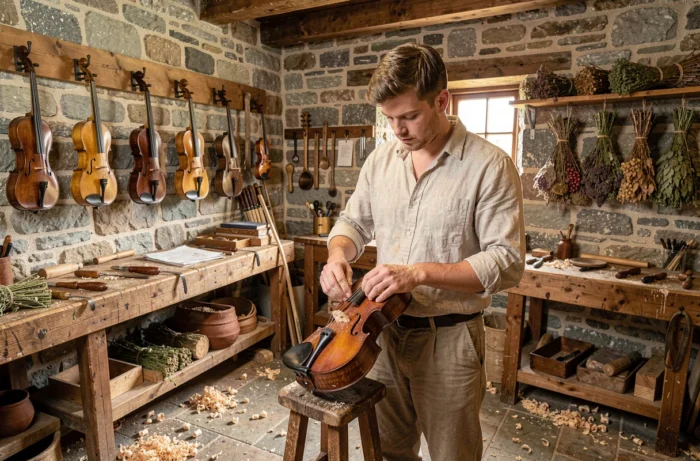
The Minister of National Education, Édouard Geffray, expressed a new ambition during a visit to Morbihan in early September 2026: to generalize bilingual pathways in regional languages and create a “regional language” specialty for the baccalaureate by 2028. The announcement was made at a school in Locmaria-Grand-Champ that was just opening a new French-Breton section.
The political signal is clear, but the ground tells a different reality. In Centre-Finistère, in La Feuillée, a bilingual program that has been running for seven years operates with only half a Breton teaching position, while regulations require a full position. Parents are mobilizing to obtain what the ministry promises at the national level.
This gap between announcements and resources is not anecdotal. It structures the debate on the future of Breton education:
- The shortage of bilingual teachers remains the primary obstacle, as noted by the Kevre Breizh coordination, which alerts on the lack of filled positions in the public sector
- The Diwan (immersive), public, and Catholic programs do not have the same recruitment constraints or funding
- The creation of a specialty for the baccalaureate requires textbooks, programs, and trainers that do not yet exist at the necessary scale
Without trained teachers, the bac 2028 specialty risks remaining an empty shell. We recommend monitoring the budgetary decisions of spring 2027 to gauge the reality of this commitment.
Breton Cultural Third Places: An Expanding Hybrid Model
Brittany is seeing the emergence of third places that merge culture, craftsmanship, and agriculture. In Palais, on Belle-Île-en-Mer, the cultural third place Propice is set to be inaugurated in October 2026. This type of space does not just exhibit: it produces, trains, and hosts.
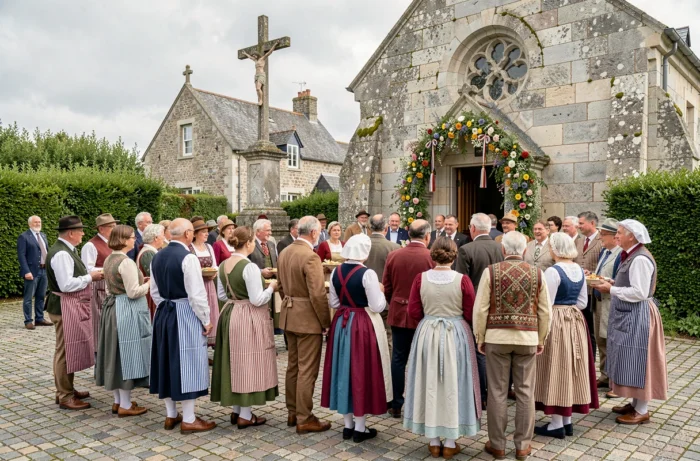
The model is distinct from traditional art centers. A typical Breton third place combines artist residencies, open workshops, local agricultural production, and cultural programming. The DRAC Bretagne supports this dynamic, particularly through “visual arts” initiatives that fund exhibitions in chapels or outdoors.
What makes these places relevant for Breton culture is their territorial anchoring. They do not advocate for a museum-like Brittany. They reinvent it by bringing together a potter from Plogoff, a bagad player infusing electro into tradition, and an organic farmer, all within the same rehabilitated building.
Fest-noz, Bagad, and Electro-Celtic Scene: The State of Living Tradition
The 2026 press kit from Tourism Brittany, built around the slogan “Leave skeptical, return Celtic,” emphasizes one point: Breton tradition is not replayed; it is reworked. A young generation of musicians blends bombarde and synthesizers, gavotte and electronic loops.
The Interceltic Festival of Lorient remains the reference event for measuring this evolution. Each edition confronts the purists of kan ha diskan with producers of contemporary Celtic music. The Saint-Loup of Guingamp, with its dance final in the Excellence category, illustrates another facet: high-level competition among Celtic circles, where the circle from Vannes competed in its first final in August 2026.
The fest-noz, inscribed in the intangible cultural heritage of humanity, retains its social function. But it also unfolds in hybrid formats:
- “Electro” fest-noz events programmed in industrial wastelands or third places
- Outdoor concerts coupled with Breton dance workshops for beginners
- Online broadcasts that allow Bretons in the diaspora to participate from afar
This plasticity protects the fest-noz from the risk of folklorization. The format evolves, the community function remains intact.
Visual Arts in Brittany: Pathways and Residencies Beyond the Walls
Contemporary Breton art is no longer confined to urban galleries. In Pont-Scorff, in Morbihan, the “Art chemin faisant” pathway celebrates its thirtieth anniversary in 2026 with artist Yoon Ji-Eun, transforming the town into an open-air museum until September. The Atelier d’Estienne, a contemporary art center in the village, anchors this programming over time.
The DRAC Bretagne supports this dissemination of visual arts in rural chapels and natural spaces. The result: works designed for specific locations that engage with religious architecture or the coastal landscape rather than with the white cube of a gallery.
Breton culture in 2026 is read through these intersections: an algorithm learning Breton, a minister visiting a bilingual class in Morbihan, an electro fest-noz in a rehabilitated wasteland. Breton identity is built as much in lines of code as in the rounds of gavotte.